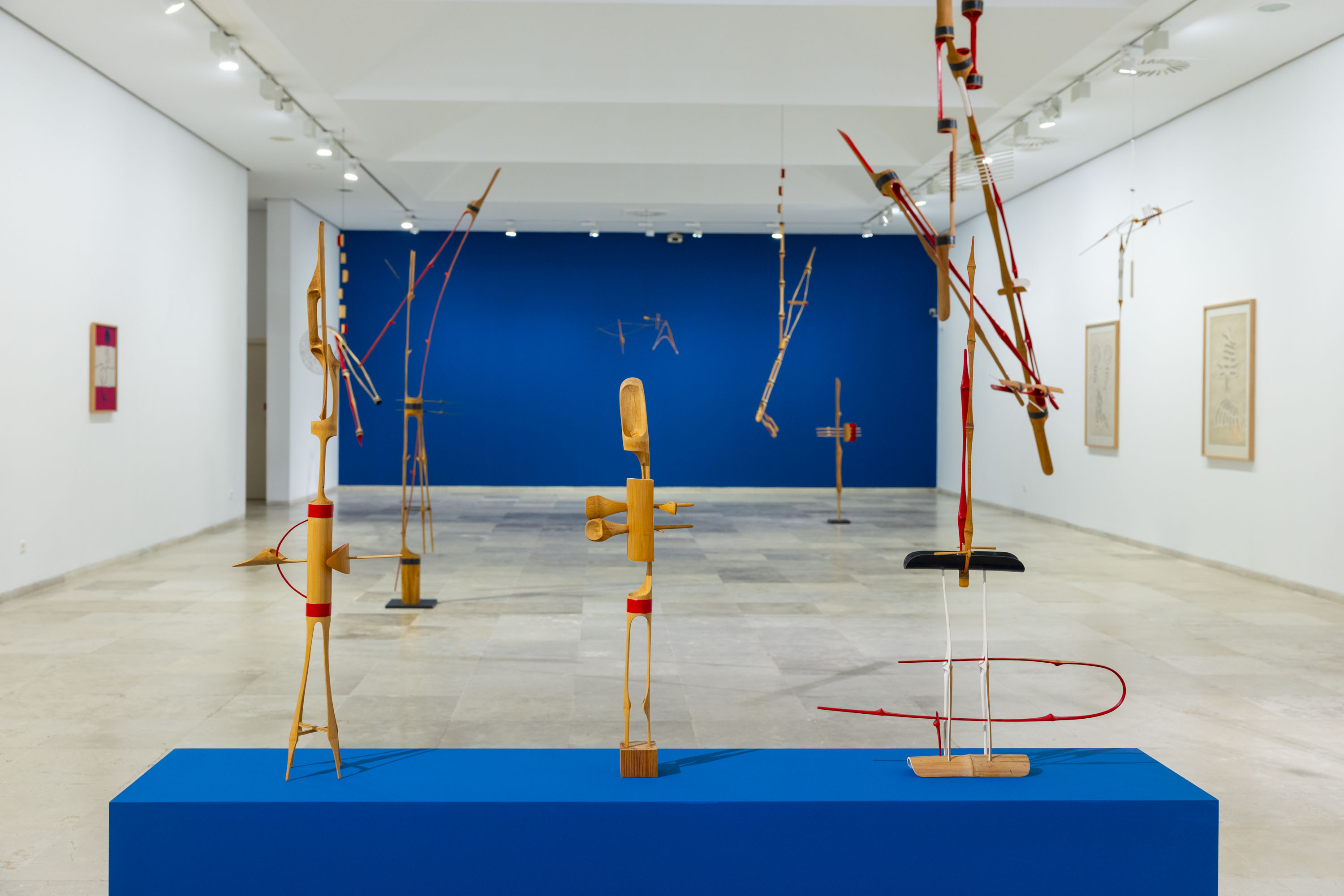
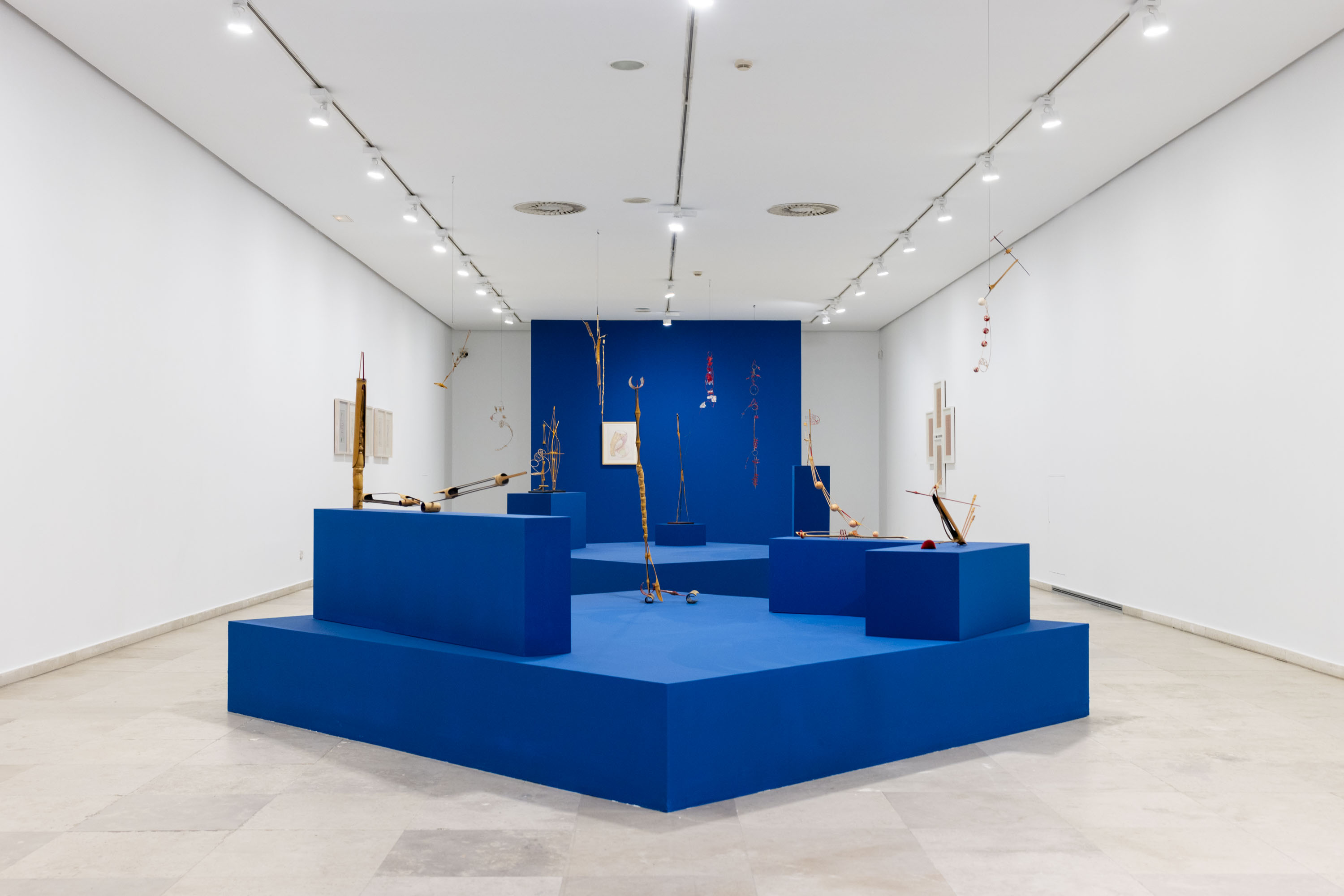
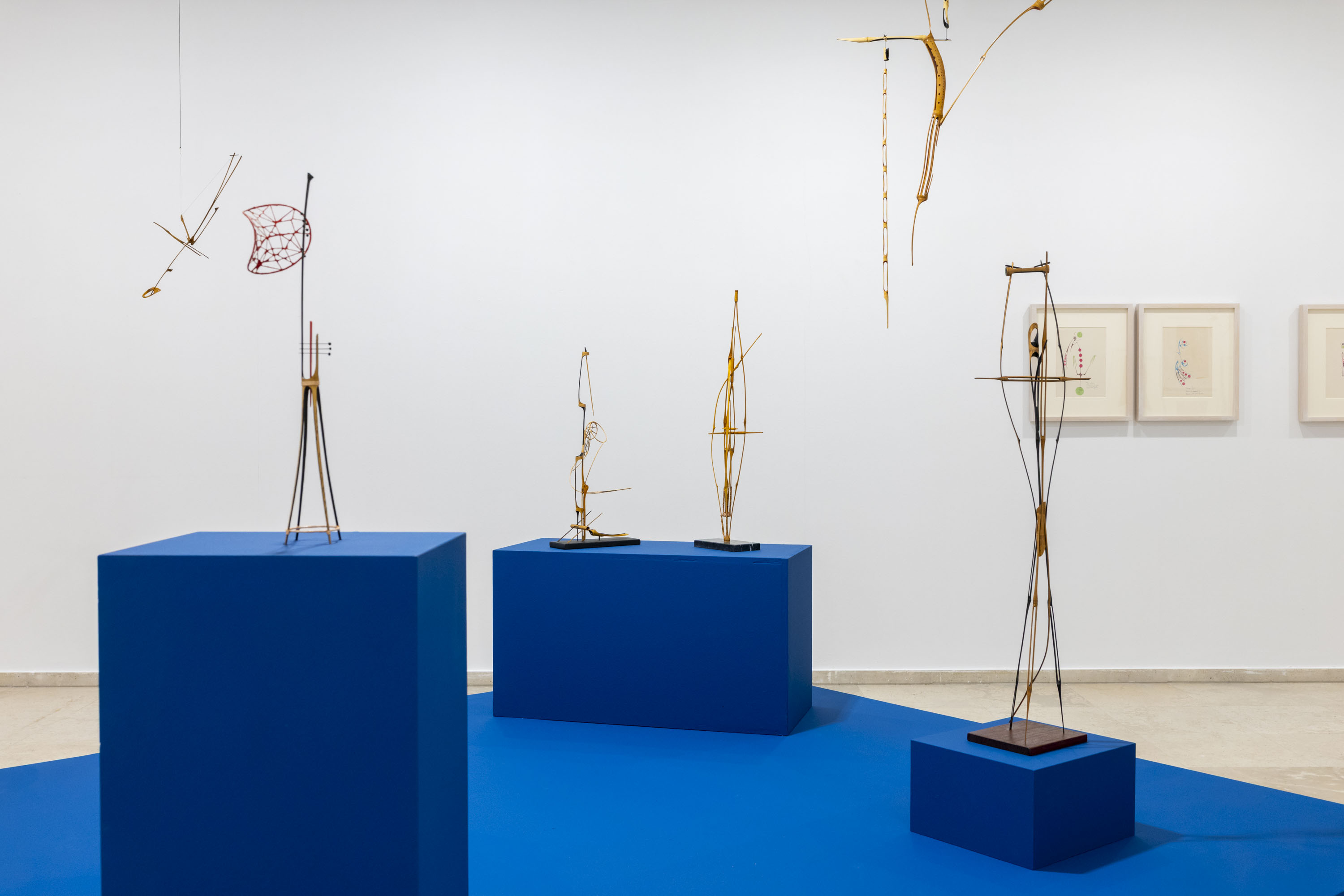
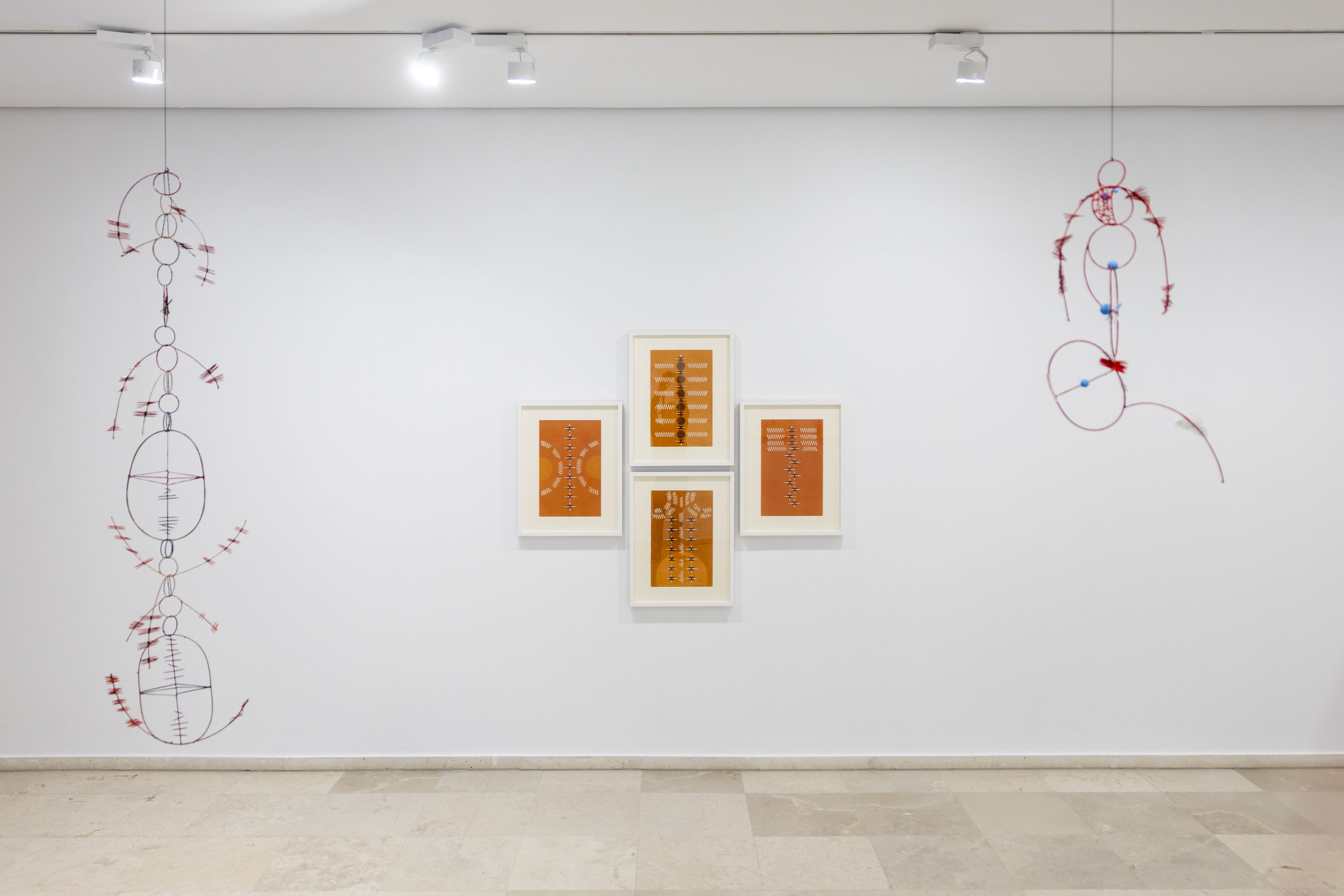
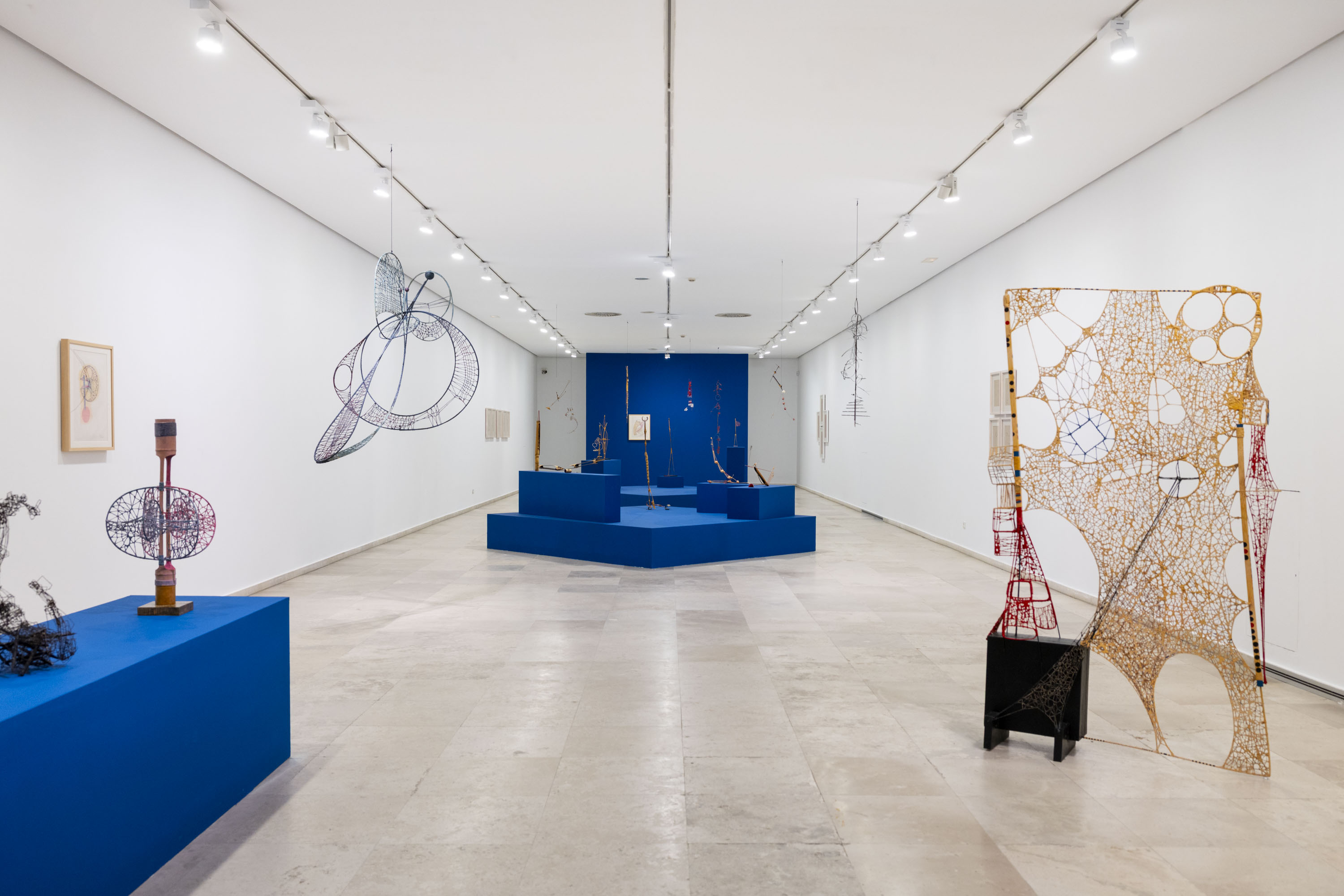
“La promesa de Villèlia” es la primera exposición institucional individual de cierta escala dedicada al artista en casi 30 años. Arranca cronológicamente en 1954, con su “Homenaje a Blume”, perteneciente a la ACAC. Fue aquél un año importante pues hace su primera individual en el Museo de Mataró y entabla amistad con Joan Brossa. Aunque Villèlia no frecuentaba los corrillos artísticos, era muy respetado por sus colegas creadores. Su obra despertó el interés de artistas de gran relevancia, como Miró o Ferrant. Éste último, meses antes de morir, escribió sobre la obra aún joven de Villèlia, un bellísimo escrito del que ha sido tomado el título de la exposición.
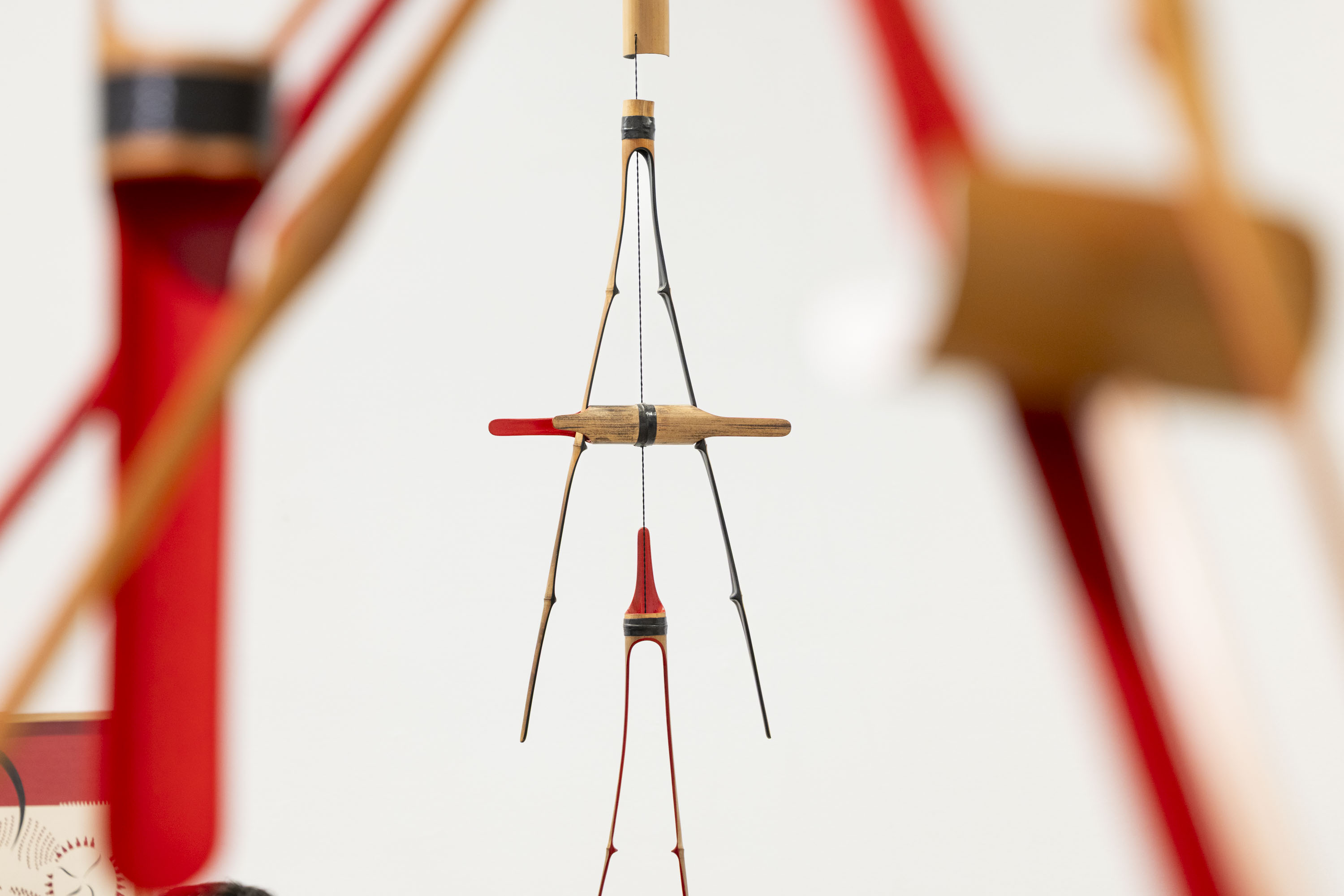
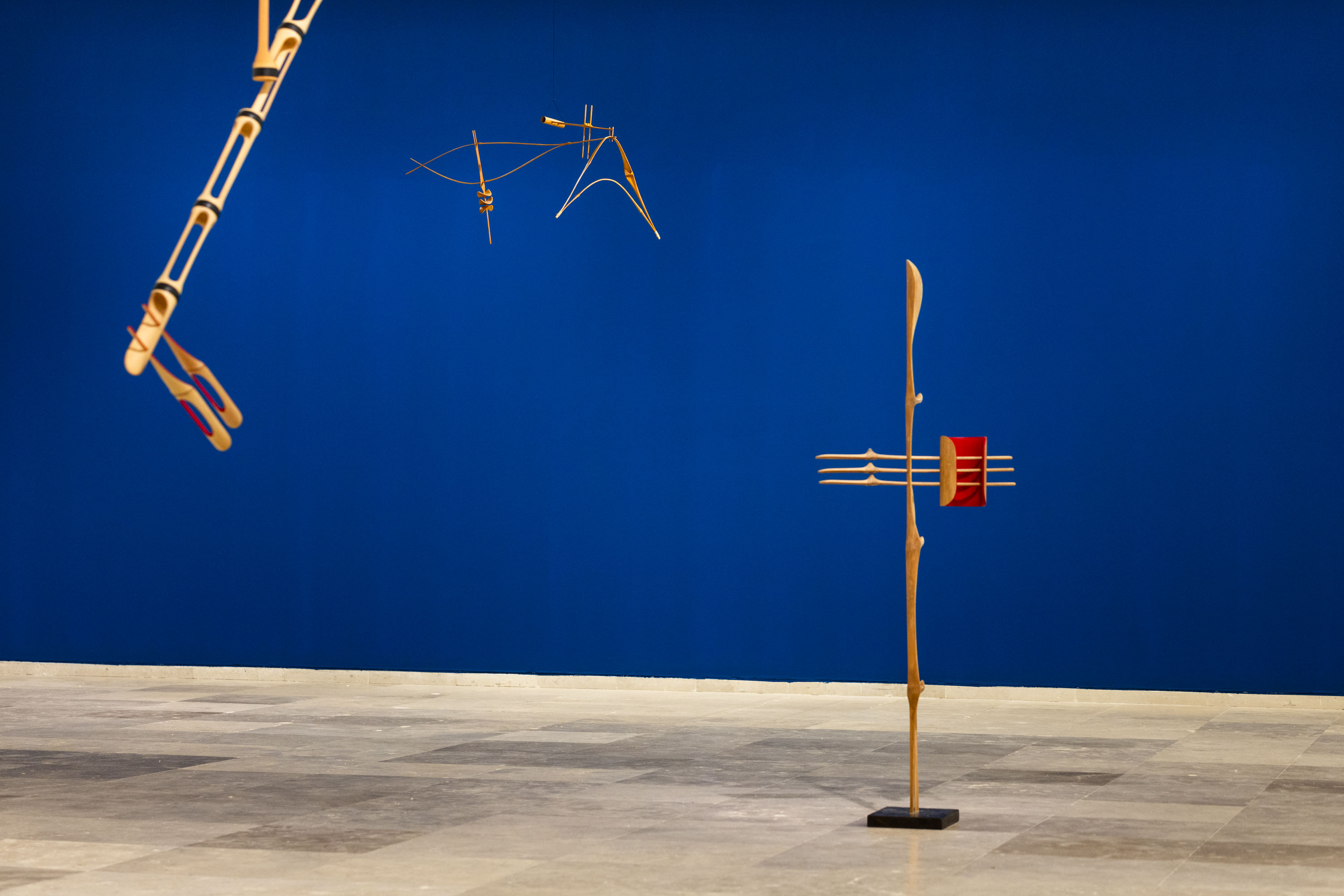
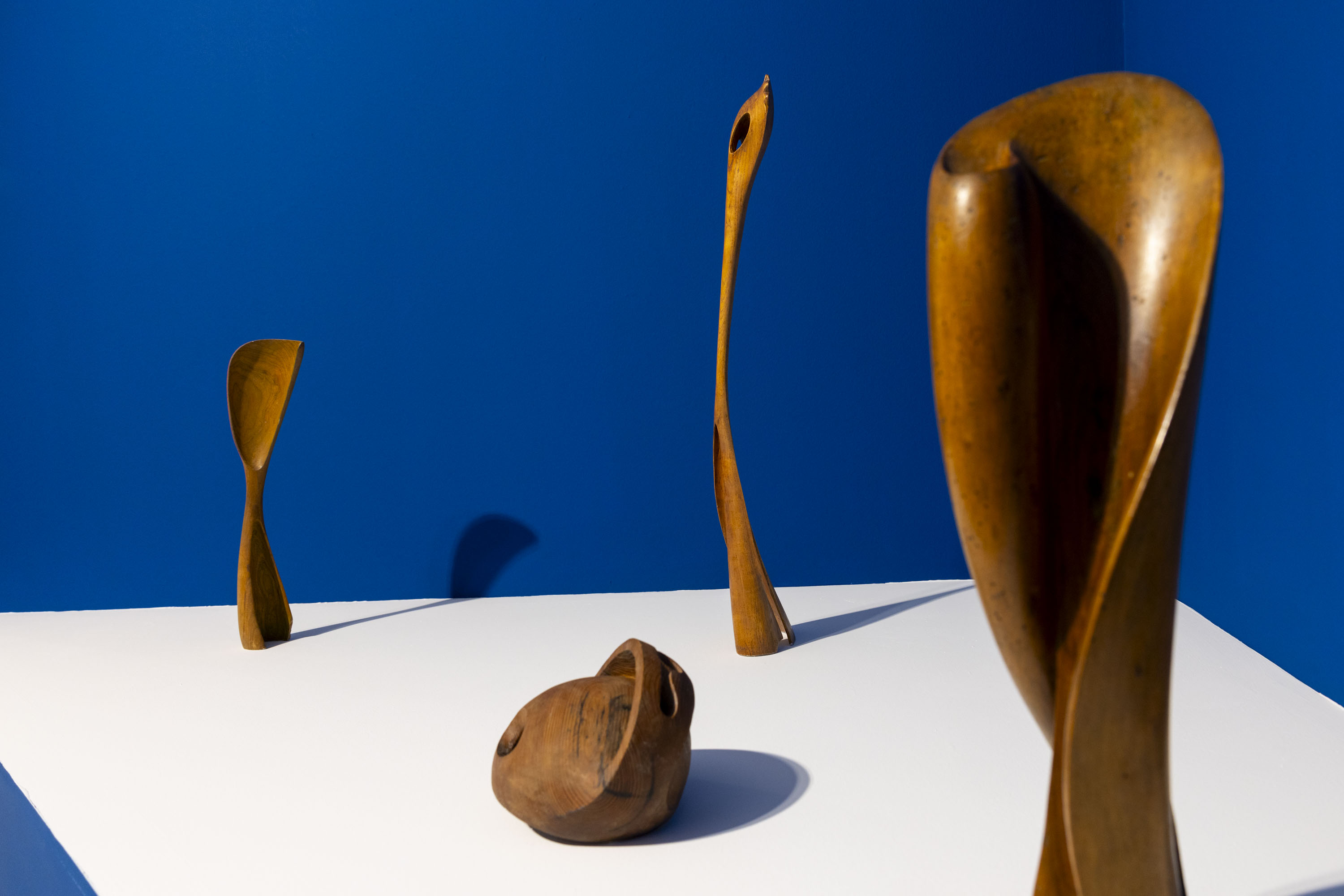
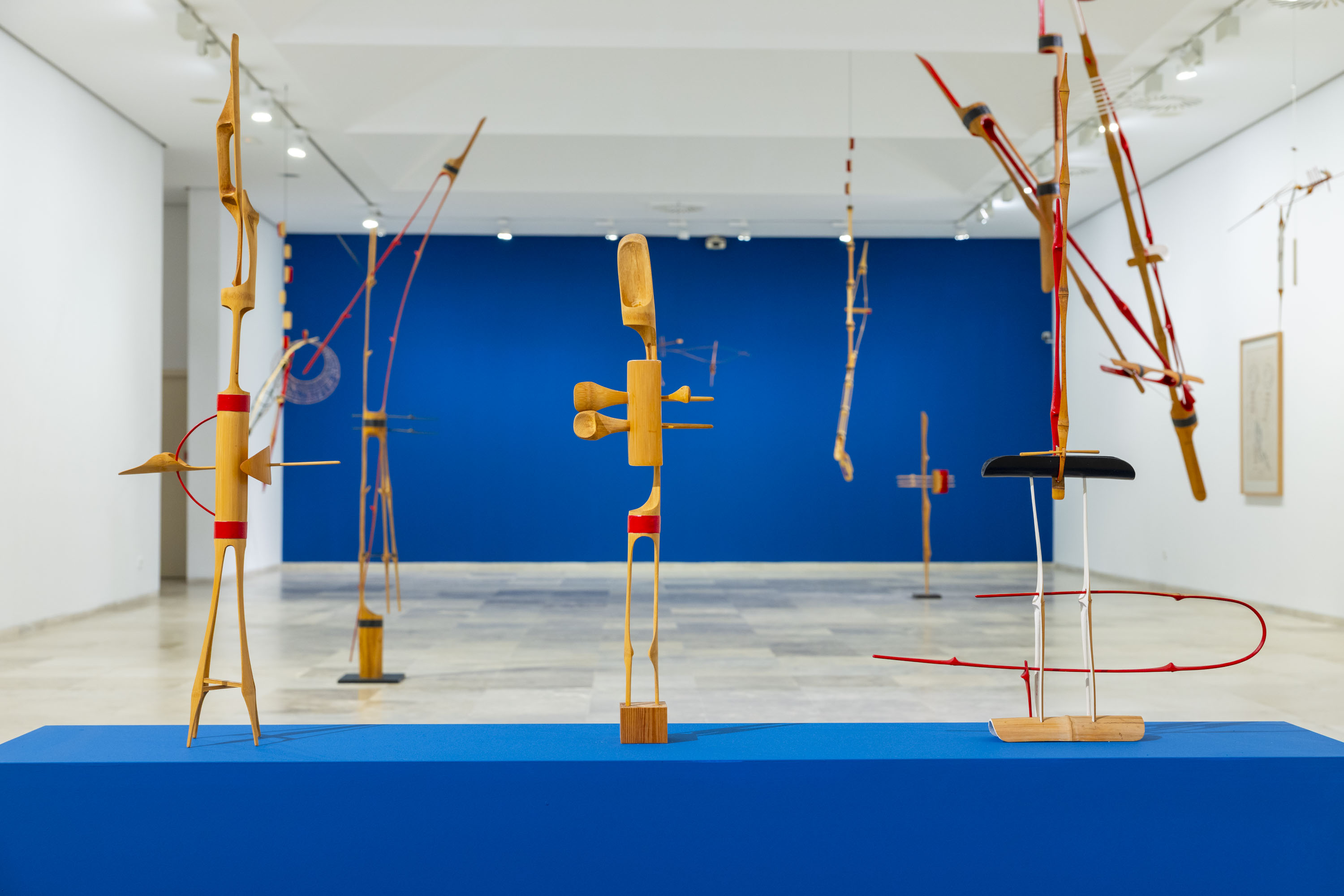
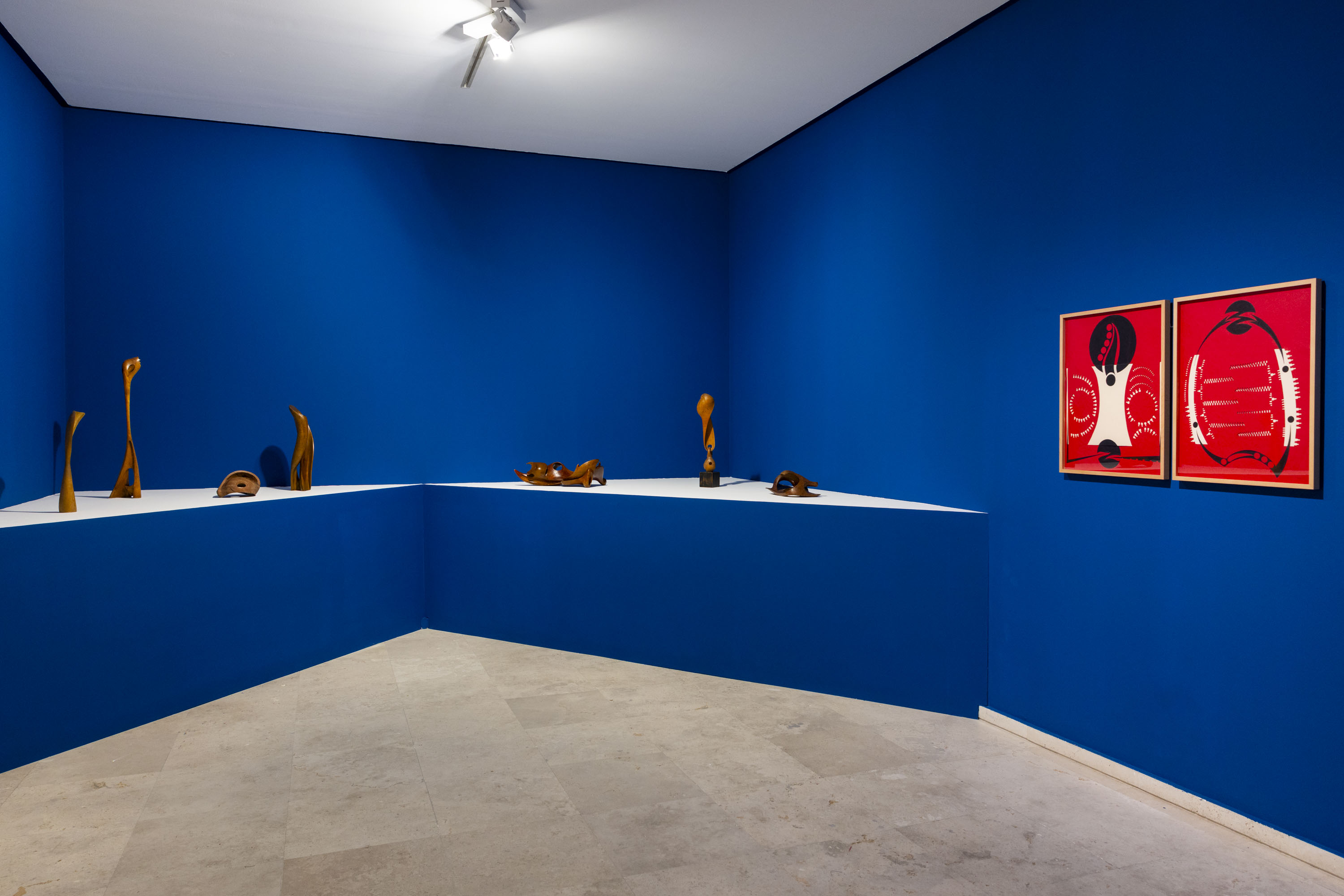
Villèlia perseveró en el uso de materiales “no acreditados”. A la minuciosa talla de diferentes maderas, como cerezos, nogales, caobas o melis, seguirán los tallos de cebolla y las fibras de chumbera, y empiezan a abrirse también camino las cañas de arundo, con las que se afianzará el lenguaje que le hizo tan célebre, no sin antes haber trabajado también la materia industrial, como el alambre de acero. No es fácil asocial los materiales a una cronología concreta; sí conviene situarlo, en líneas generales, en el ámbito del concentrado tratamiento de la madera, a la que aplica leves y precisas zonas de color y que ensambla por medio de hilos o cuerdas. Encontró su mayor fortuna en la relación entre la línea y el espacio, que llevó a un singular refinamiento, y en los saltos de escala mostró una destreza encomiable. A pesar de la naturaleza prosaica del material, ya consolidado el bambú, dotó a su práctica de una sutileza clamorosa.
Moisès Villèlia was a somewhat eccentric artist, both in his work and in his way of being in art, in the way he conducted his work in his time; his was not a typical career, as the supposed isolation he flaunted was a source of delight to him throughout his life. He travelled widely, learned about other cultures and became acquainted with different models of depiction; he made unusual materials his own, and with them he prefigured forms which are not only no longer tangential, but which today abound in our artistic environment – indeed, they monopolise a large part of its formal parameters. As is well known, a considerable number of artists opt for precarious materials guided by an interest in nature, or to mitigate the delusions of loud, glittering technology. The work of Moisès Villèlia is a prefigurative example of these artists related to a sort of neo-povera aesthetic. He was about a decade ahead of the first generation of Italian povera artists, although, beyond the shared inclination towards poor materials, Villèlia’s postulates were not exactly the same, although they did not stray from the search for a certain truth.
The exhibition ‘Villèlia’s Promise’ is the first individual institutional exhibition in almost three decades. It kicks off with Homenaje a Blume (“Hommage to Blume”), from 1954, a work that belongs to our collection. It was a significant year as it was when he held his first individual exhibition at the Museum of Mataró and became friends with Joan Brossa. Although Villèlia did not frequent artistic circles, he was highly respected by his fellow artists. His work aroused the interest of major artists such as Miró and Ferrant. Just a few months before his death, the latter wrote a beautiful piece about Villèlia’s still young work, from which the title of the exhibition is taken.
Villèlia persevered in his use of ‘unproven’ materials. The meticulous carving of different kinds of wood, such as cherry, walnut, mahogany and yellow pine, was followed by the work on onion stalks or prickly pear fibres made an appearance, and giant canes were also used; he thereby consolidated the language that made him so well known, but not before he also worked with industrial materials such as steel wire. It is not easy to associate the materials with a specific chronology. He is generally placed in the field of the concentrated treatment of wood, to which he applied slight and precise areas of colour and which he assembled by means of threads or strings given his interest in typically sculptural notions, such as gravity and balance. He found his greatest fortune in the relationship between line and space, which he brought to a singular refinement, and in changing scale he showed commendable skill. Despite the prosaic nature of the material, as bamboo was already consolidated, he endowed his art with clamorous subtlety.